“However you look at it, cooling matters! Cooling is at the very heart of modern life. It enables people to live and work comfortably, it saves lives, it enables people to achieve. The need for cooling is everywhere, it touches lives in fantastic though often unnoticed ways. However, you look at it, cooling matters.” said Steve Gill, founder of World Refrigeration Day.
At a side session held during the 2022 AHR Expo in Las Vegas, Gill announced that Cooling Matters would be the day’s 2022 theme. “Our objective is to make the public aware of cooling’s essential benefits, how cooling impacts daily life, and how technology choices foster environmental well-being of future generations.” World Refrigeration Day is celebrated on and around June 26.

According to the World Refrigeration Day secretariat, despite policies, standards and codes related to the refrigeration and air-conditioning industry, there is still significant lack of public understanding of cooling’s importance even though issues like refrigerant transition, emissions reduction, and maximizing energy efficiency have been addressed for decades by governments due to global policies and binding international frameworks.
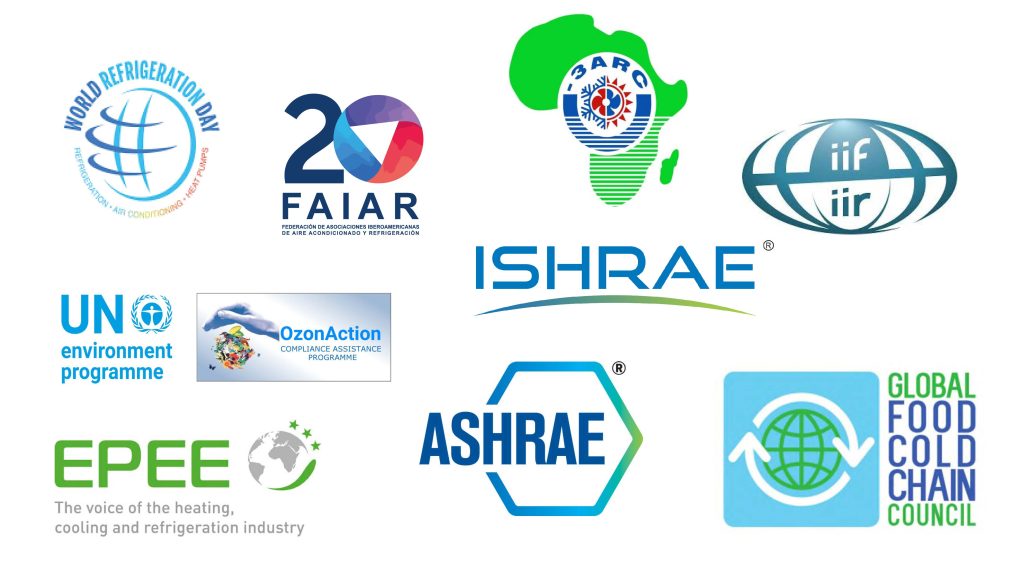
At AHR, partnering groups for previous World Refrigeration Day campaigns described how the day serves as a platform to educate the public about cooling’s benefits. Past campaigns targeted refrigerant choices that protect the ozone layer, using the cold chain to distribute food, medicines and vaccines, and promoting “cool” careers. Together, those partnering groups represent a half million engineers and technicians, more than a thousand suppliers of equipment services, and near 200 governmental bodies and agencies: United Nations Environment Program OzonAction, ASHRAE, European Partnership for Energy and the Environment, Federation of Ibero-American Air Conditioning and Refrigeration Associations, Global Food Cold Chain Council, International Institute of Refrigeration, Indian Society of Heating, Refrigerating and Air-Conditioning Engineers, and Union of Associations of African Actors in Refrigeration and Air Conditioning. They are among some hundred national and international associations that are World Refrigeration Day allies.
“The public can make choices that minimize environmental impacts when they select, operate and maintain cooling equipment,” Gill explained. According to the International Energy Agency, the average efficiency of air conditioners sold today is less than half of what is typically available on the shelves – and one third of best available technology.
Buildings generate nearly 40% of annual global CO2 emissions. Of those total emissions, building operations are responsible for 28% annually, while building materials and construction are responsible for an additional 11% annually. “How RAC systems are maintained and operated is one of the most important actions the world can take to address climate change,” said Rajan Rajendran representing ASHRAE’s Refrigeration Committee and the Global Food Cold Chain Council.
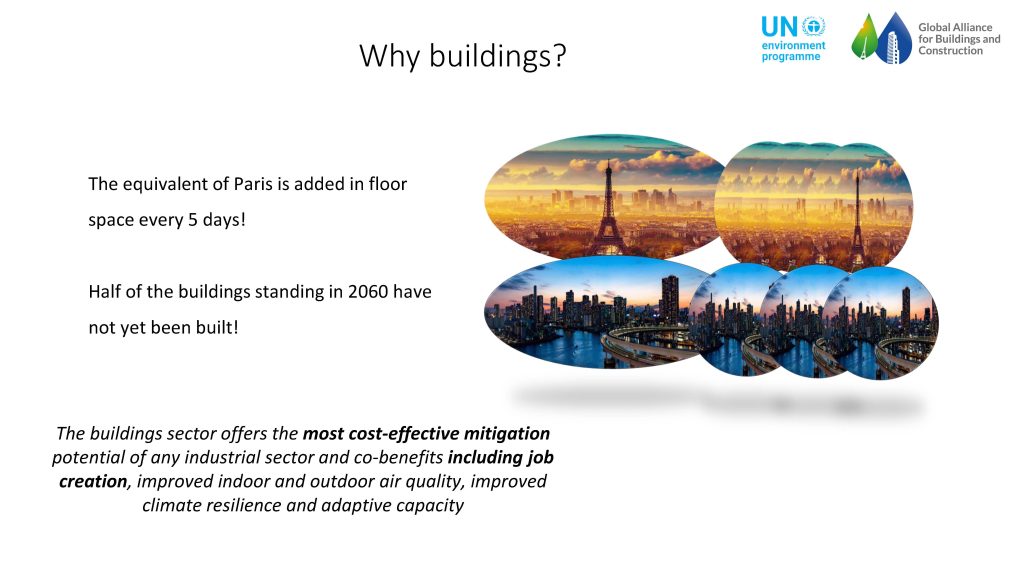
The challenge will only become greater. “Half of the buildings standing in 2060 have not yet been built,” said Ayman Eltalouny, representing UNEP OzonAction. There are 3.6 billion cooling units in use today. By 2050, that number is expected to be 9.5 billion. “If left unchecked, emissions from cooling appliances are expected to double by 2030. They will triple by 2100 driven by heat waves, population growth, urbanization and a growing middle class. Moving to best available cooling technologies would reduce cumulative emissions by 38 gigatons of CO2 emissions by 2030. This would avoid future greenhouse gas emissions equivalent to 2018 levels.”
And there is the increasing need for food. “Due to population growth, the world will need 60% more food by 2050. The unfortunate reality is much of the world’s food supply is lost due to waste,” said Rajendran. “Increasing refrigeration in emerging economies is required to meet this growing demand. Some 475 million tons of food currently lost could be saved by wider application of refrigeration.”
“We must communicate to the public that there is value to cooling if we hope to have policies in place which encourage use of low carbon emitting refrigeration and air conditioning,” said Rajendran.
Said Gill, “Cooling Matters will tell the story of how our wellbeing depends upon cooling and how cooling technology choices can safeguard the well-being of future generations. We encourage the whole the refrigeration and air-conditioning industry to join us in celebrating World Refrigeration Day 2022. Join the global community conversation using the hashtags #coolingmatters and WREFD22.”
To get involved, to share ideas or your own actives and events, please email us info@worldrefrigerationday.org and sign up for updates here